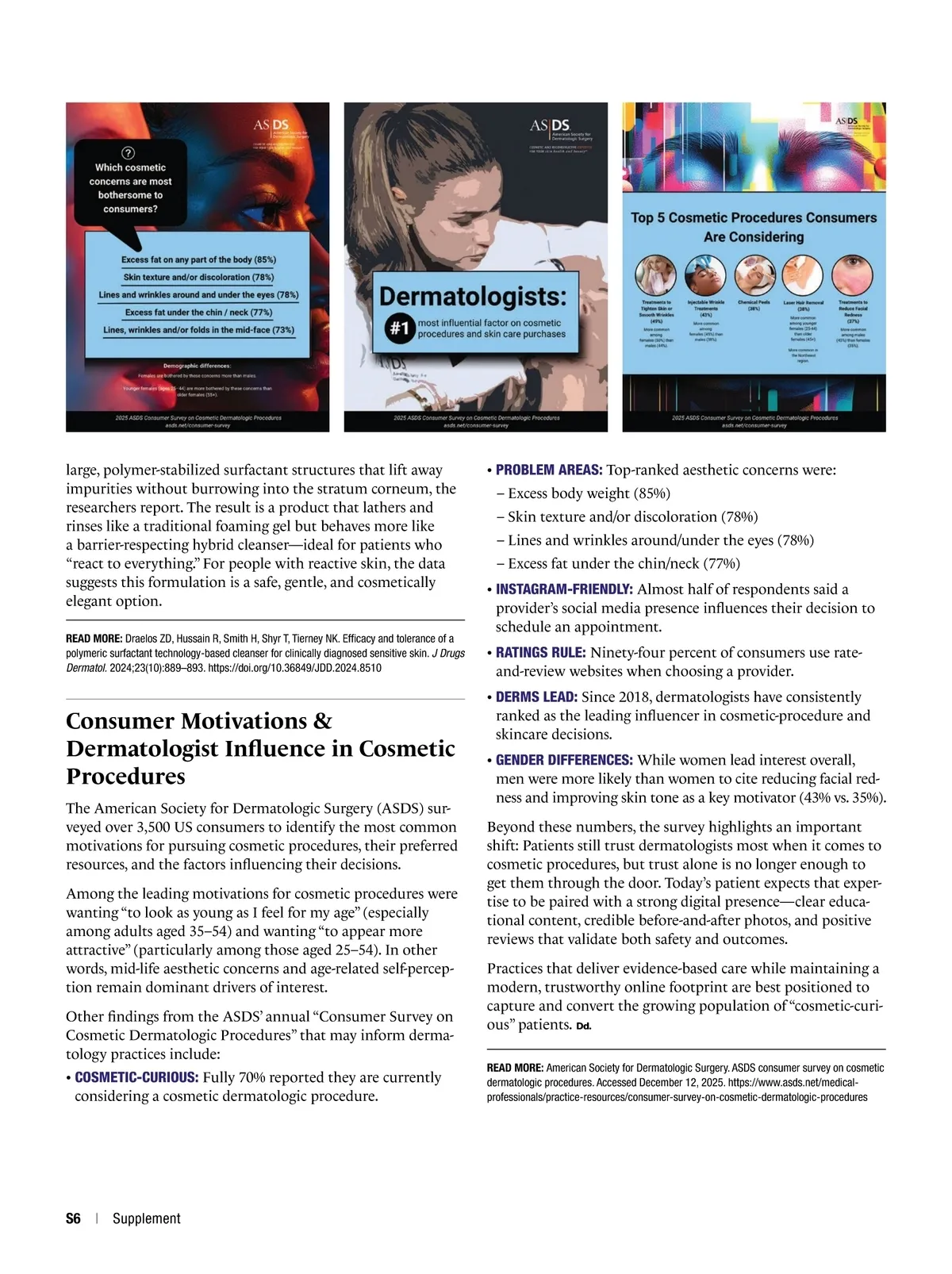
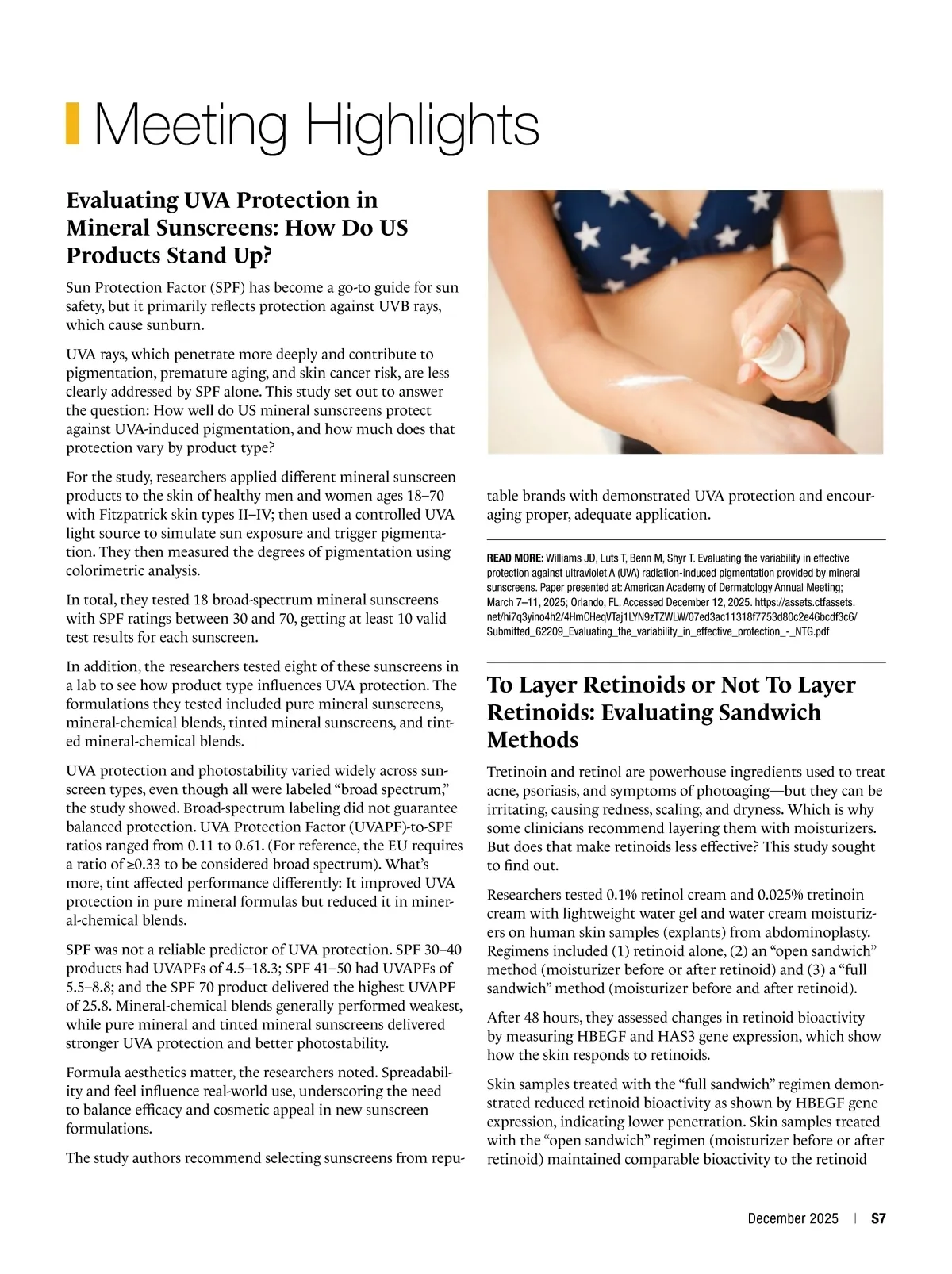
large, polymer-stabilized surfactant structures that lift away impurities without burrowing into the stratum corneum, the researchers report. The result is a product that lathers and rinses like a traditional foaming gel but behaves more like a barrier-respecting hybrid cleanser—ideal for patients who “react to everything.” For people with reactive skin, the data suggests this formulation is a safe, gentle, and cosmetically elegant option. READ MORE: Draelos ZD, Hussain R, Smith H, Shyr T, Tierney NK. Efficacy and tolerance of a polymeric surfactant technology-based cleanser for clinically diagnosed sensitive skin. J Drugs Dermatol. 2024;23(10):889–893. https://doi.org/10.36849/JDD.2024.8510 • PROBLEM AREAS: Top-ranked aesthetic concerns were: – Excess body weight (85%) – Skin texture and/or discoloration (78%) – Lines and wrinkles around/under the eyes (78%) – Excess fat under the chin/neck (77%) • INSTAGRAM-FRIENDLY: Almost half of respondents said a provider’s social media presence influences their decision to schedule an appointment. • RATINGS RULE: Ninety-four percent of consumers use rate-and-review websites when choosing a provider. • DERMS LEAD: Since 2018, dermatologists have consistently ranked as the leading influencer in cosmetic-procedure and skincare decisions. • GENDER DIFFERENCES: While women lead interest overall, men were more likely than women to cite reducing facial red-ness and improving skin tone as a key motivator (43% vs. 35%). Beyond these numbers, the survey highlights an important shift: Patients still trust dermatologists most when it comes to cosmetic procedures, but trust alone is no longer enough to get them through the door. Today’s patient expects that exper-tise to be paired with a strong digital presence—clear educa-tional content, credible before-and-after photos, and positive reviews that validate both safety and outcomes. Practices that deliver evidence-based care while maintaining a modern, trustworthy online footprint are best positioned to capture and convert the growing population of “cosmetic-curi-ous” patients. Dd . READ MORE: American Society for Dermatologic Surgery. ASDS consumer survey on cosmetic dermatologic procedures. Accessed December 12, 2025. https://www.asds.net/medical-professionals/practice-resources/consumer-survey-on-cosmetic-dermatologic-procedures Consumer Motivations & Dermatologist Influence in Cosmetic Procedures The American Society for Dermatologic Surgery (ASDS) sur-veyed over 3,500 US consumers to identify the most common motivations for pursuing cosmetic procedures, their preferred resources, and the factors influencing their decisions. Among the leading motivations for cosmetic procedures were wanting “to look as young as I feel for my age” (especially among adults aged 35–54) and wanting “to appear more attractive” (particularly among those aged 25–54). In other words, mid-life aesthetic concerns and age-related self-percep-tion remain dominant drivers of interest. Other findings from the ASDS’ annual “Consumer Survey on Cosmetic Dermatologic Procedures” that may inform derma-tology practices include: • COSMETIC-CURIOUS: Fully 70% reported they are currently considering a cosmetic dermatologic procedure. S6 | Supplement
The Dermatology Digest Innovations in Pre-, Peri-, and Post- Procedure Skincare December 2025: S-6